Cold Truth: How to Actually Stock Your Home Bar the Right Way
Let's be honest. That sad little cart in the corner of your living room with a half-empty bottle of bourbon, some lukewarm mixers, and a stack of mismatched pint glasses? That's not a home bar. That's a cry for help.
Setting up a proper home bar isn't about spending a fortune or turning your den into a cocktail laboratory. It's about knowing the basics — temperature, storage, glassware, and a little common sense — so that when you pour a drink for yourself or a guest, it actually tastes the way it's supposed to. No pretension. No wasted good whiskey. Just a setup that works.
Your Whiskey Doesn't Belong in the Freezer (Or the Fridge)
This is the mistake that makes bartenders wince. People stick their whiskey in the freezer thinking it'll be more refreshing. What it actually does is mute the flavor compounds that make a good bourbon or single malt worth drinking in the first place. Whiskey is a room-temperature spirit. That's how the distiller intended it. That's how you should drink it.
The sweet spot for storing whiskey is between 59°F and 68°F — basically, a cool room away from direct sunlight and heat sources. A kitchen cabinet above the stove? Terrible idea. Heat and light degrade whiskey over time, especially once a bottle is opened and oxygen starts doing its thing. A dedicated shelf in a pantry, a bar cabinet away from windows, or even a basement shelf works great. The goal is dark, cool, and stable.
Now, what does belong in the fridge? Your vermouth, for starters. Most people treat vermouth like it's immortal. It's not. Once opened, it oxidizes fast — usually within three to four weeks in the fridge. If you're making Manhattans or Negronis at home and your vermouth has been sitting on a shelf for six months, that's why your cocktails taste off. Keep it cold, keep it fresh, replace it often.
The Glassware Problem Nobody Talks About
You don't need a cabinet full of specialty glasses to drink well at home. But you do need the right ones for what you're actually pouring. Here's a practical breakdown:
Rocks glass (Old Fashioned glass): This is your workhorse. Whiskey neat, whiskey on the rocks, an Old Fashioned — this glass handles it all. Get a set of four decent ones. They don't need to be crystal. They just need to be heavy enough to feel right in your hand.
Highball glass: If you're mixing whiskey with ginger beer, ginger ale, or soda, you want a tall glass with room for ice. A proper highball glass gives your drink space to breathe and keeps the carbonation from going flat too fast.
Coupe or Nick & Nora glass: If you're making stirred cocktails — Manhattans, Whiskey Sours without ice, anything elegant — a coupe is your friend. Skip the oversized martini glass that spills every time you look at it.
Glencairn glass: If you're serious about nosing and tasting whiskey neat, a Glencairn is worth having around. The tapered top concentrates the aromas beautifully. It's not pretentious — it's just the right tool for the job.
What you can skip: novelty shot glasses shaped like cowboys, that giant fishbowl margarita glass your aunt gave you, and anything that requires instructions to drink from.
Ice Is Not an Afterthought
Bad ice ruins good drinks. Period. If your freezer makes those tiny, hollow cubes that melt in about four minutes, your cocktails are getting watered down faster than you realize. Invest in a good ice cube tray that makes large, dense cubes — the kind that melt slowly and keep your drink cold without diluting it into oblivion.
For whiskey on the rocks, a single large cube or a sphere is ideal. For highballs and mixed drinks, standard cubes are fine as long as they're solid. And whatever you do, keep your ice away from anything that smells — ice absorbs odors from your freezer like a sponge, and nothing kills a nice pour of rye faster than a cube that tastes faintly of last week's leftovers. Use a sealed ice cube tray or a dedicated ice bin.
The Essential Spirits List (Keep It Simple)
You don't need thirty bottles to make a great home bar. You need the right ten. Here's a starting point that covers most classic cocktails without breaking the bank:
- Bourbon (something mid-shelf and versatile — think Buffalo Trace or Four Roses Yellow Label)
- Rye whiskey (for Manhattans and Old Fashioneds with a little more spice)
- Blended Scotch (for guests who want something smoother)
- Irish whiskey (easy-drinking, crowd-pleasing)
- Gin (a solid London Dry style)
- Vodka (a clean, neutral option for guests who insist)
- Rum (a good aged rum goes a long way)
- Tequila (100% agave, always)
- Sweet vermouth (keep it in the fridge)
- Dry vermouth (keep it in the fridge)
From there, a bottle of Angostura bitters, some simple syrup, and a few citrus fruits cover the base of most classic cocktails. Build from here as your tastes develop.
The Stuff People Always Forget
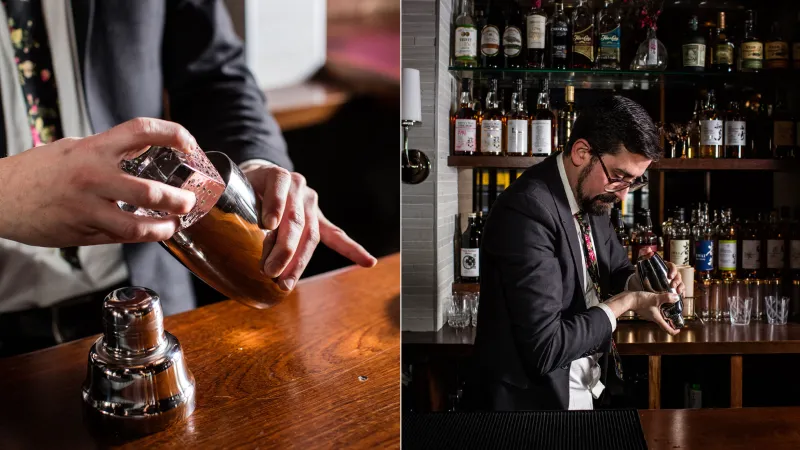
A good bar tool kit doesn't need to be fancy, but it does need to exist. At minimum, you want a jigger (don't eyeball your pours — you'll either over-pour or make weak drinks), a mixing glass or shaker, a bar spoon, a strainer, and a channel knife or peeler for citrus twists.
Also: a dedicated cutting board for your garnishes. Using the same board you just cut chicken on is not the vibe.
And finally — write down what you're out of before you run out of it. Nothing kills the energy of a good night at home like reaching for the bourbon and finding an empty bottle. Keep a running list. Restock before you hit empty. It's basic, but you'd be amazed how many home bars fail this one simple test.
Setting up a home bar the right way isn't complicated. It's just a matter of caring enough to do it right. Get the temperatures correct, stock the right glasses, use good ice, and keep your vermouth fresh. Do those things and you're already ahead of ninety percent of home setups out there.