Chasing the Dragon: How Whiskey Hype Is Picking Your Pocket One Bottle at a Time
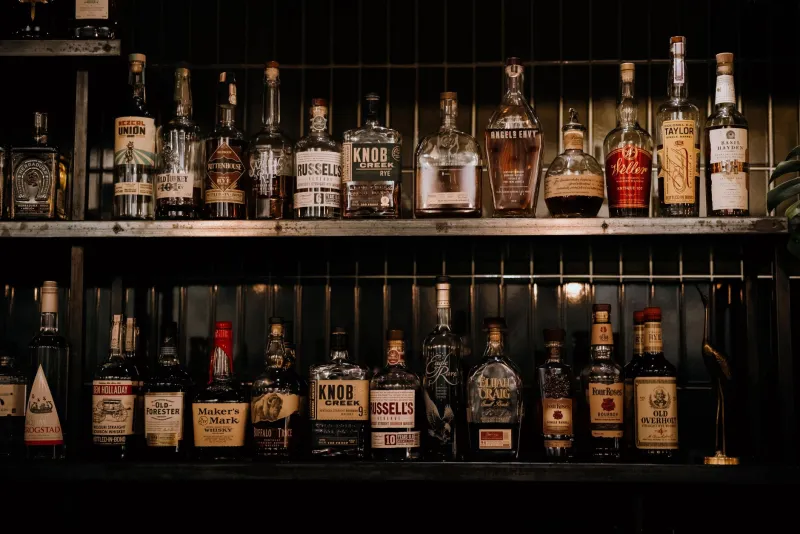
Let's set the scene. You're standing in a liquor store, eyeing a bottle of bourbon that costs more than your car payment. The label looks like it was designed by someone who charges by the serif. The neck tag mentions something about a "limited expression" and "hand-selected barrels." A guy next to you whispers that he drove three hours to find it. You pull out your credit card.
Welcome to the whiskey trap.
The American whiskey market has gone sideways in the best and worst possible ways. On one hand, there has never been more genuinely excellent whiskey available at reasonable prices. On the other hand, a parallel universe has emerged — one where bottles trade like NFTs, where grown adults camp outside liquor stores at 6 a.m., and where the question "is it good?" has been almost entirely replaced by "can I flip it?"
Something has gone seriously wrong, and it's worth talking about.
How We Got Here
The hype machine didn't build itself overnight. A perfect storm of factors converged over the last fifteen years to create the collector's market we're stuck with now.
First, the bourbon boom of the early 2010s caught most distilleries completely off guard. Demand exploded faster than aged stock could catch up — because you can't rush a barrel. That genuine scarcity created real frustration, and real frustration creates desire. Distilleries noticed.
Then came social media. Instagram and Reddit turned whiskey into a status symbol with a built-in audience. Post a photo of a rare bottle and watch the comments light up. The dopamine hit of being the guy who found the allocated release became its own reward, completely separate from what was actually in the glass.
Distilleries — and their parent corporations — are not stupid. When they saw bottles retailing for $50 selling on secondary markets for $400, they didn't see a problem. They saw a pricing opportunity. Limited releases got more limited. Allocations got tighter. Suggested retail prices crept upward. The manufactured scarcity engine was running at full steam.
The Investment Myth
Here's where things get genuinely dangerous for your wallet: the idea that whiskey is an investment.
It isn't. Not for most people, and not most of the time.
Unlike wine, whiskey doesn't continue to develop once it's bottled. That Pappy Van Winkle 23 you're "cellaring" isn't getting better. It's just sitting there, waiting for you to either drink it or sell it to someone who will. The appreciation in value exists entirely in the secondary market — a market that is unregulated, inconsistent, and entirely dependent on hype cycles that can collapse.
Ask anyone who loaded up on Weller Special Reserve when it was the "poor man's Pappy" and watched the secondary prices plateau once Buffalo Trace ramped up distribution. Ask the collectors who paid four figures for certain Japanese expressions only to see prices crater when new product hit the shelves.
The people reliably making money on whiskey are the distilleries, the distributors, and the flippers who got in early. If you're buying a $200 bottle at a secondary market price hoping to sell it for $300 later, you are not an investor. You are the last person in a very long game of hot potato.
What Bartenders Actually Think
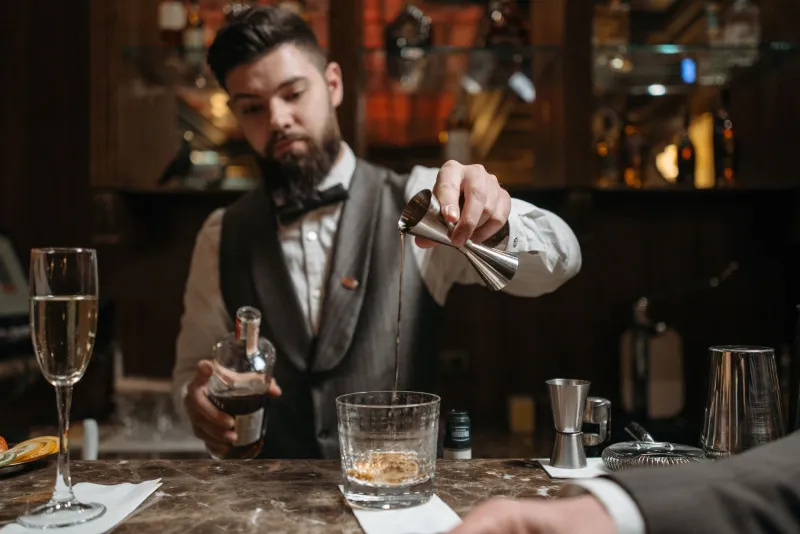
Spend enough time on the right side of a bar and you'll hear a consistent refrain from the people who work with whiskey professionally: the gap between price and quality in the allocated market is often absurd.
Bartenders taste for a living. They're not impressed by neck tags. Ask one what they'd spend their own money on, and they'll almost never point you toward the locked case behind the register. They're more likely to recommend a craft distillery you've never heard of, a well-priced single barrel from a mid-tier producer, or a blend that punches so far above its weight class it almost feels like cheating.
The industry truth that the hype machine doesn't want you to hear: there is genuinely excellent American whiskey available for under $60 a bottle. There always has been. The $200 bottle is not five times better. In blind tastings — the great equalizer — allocated bottles routinely lose to everyday drinkers. The research on this is consistent enough to be almost boring at this point.
The Psychology of Scarcity
So why do smart people keep falling for it? Because scarcity is one of the most powerful psychological levers in marketing, and the whiskey industry has gotten exceptionally good at pulling it.
When something is hard to get, our brains assign it more value — regardless of whether that value is real. It's the same reason a restaurant with a three-month waitlist feels more desirable than one with open tables on a Saturday night. Difficulty of acquisition becomes a proxy for quality, even when the two have nothing to do with each other.
Combine that with social proof — everyone on Reddit talking about how incredible this bottle is — and you've got a feedback loop that's almost impossible to break from the inside. The community reinforces itself. Questioning the value of an allocated bottle in certain whiskey circles is like questioning the plot of someone's favorite movie. It gets personal fast.
A Smarter Way to Build Your Shelf
None of this means you should stop caring about whiskey. It means you should care about it differently — with your palate leading instead of your FOMO.
A few practical principles for building a collection that actually delivers:
Drink before you collect. Before you spend serious money on a bottle, try it. Many bars carry allocated pours. A $25 glass of something tells you a lot more than a $200 bottle you're afraid to open.
Explore the middle shelf. The $35–$65 range is where the real value lives right now. Producers like Elijah Craig, Henry McKenna, Old Forester, and Michter's American are turning out bottles that would embarrass plenty of allocated releases in a blind tasting.
Ignore the secondary market entirely. If you can't find it at retail, move on. There is always something excellent available at retail. The bottle you can't have is only special because you can't have it.
Try craft and regional distilleries. The explosion of American craft distilling has produced some genuinely exciting whiskeys that fly completely under the hype radar. Your local bottle shop probably has three or four worth exploring.
Buy to drink, not to own. Whiskey is meant to be poured, shared, and enjoyed. A shelf full of bottles you won't open isn't a collection — it's a storage problem.
The Bottom Line
The whiskey industry is full of people who want you to believe that the bottle you can't afford is the bottle you need. That's marketing, not truth. The best whiskey you'll ever have is probably one you've already walked past because it didn't have a story attached to it.
At the end of the night, what's in the glass is all that matters. Not the hunt, not the allocation, not the secondary market value. Just the whiskey.
Don't let anyone sell you a story when what you came for was a drink.