What's Actually on That Shelf: How Bars Choose Their Whiskey (And What It Tells You About the Place)
Photo: bar whiskey shelf bottles back bar dimly lit tavern, via vintagemovieposters.name
Walk into any bar in America and the first thing worth doing isn't ordering a drink. It's looking at the shelf behind the bartender. Give it ten seconds. What you see up there — the brands, the gaps, the dusty bottles pushed to the back, the stuff lit up like a shrine — tells you more about that bar than any Yelp review ever could.
Because whiskey selection isn't random. It's a combination of budget decisions, distributor relationships, local drinking culture, and the personal taste of whoever signs the checks. Some bars nail it. Some don't. And understanding why is genuinely useful if you care about drinking well without overpaying.
The Economics of Stocking a Bar
Let's start with the part nobody talks about at happy hour: margin. Bars make money on liquor. That's not a secret. But the how gets complicated fast.
A bottle of mid-shelf bourbon might cost a bar $18 wholesale. They pour it at $9 a glass. Do the math — that's roughly 16 pours per 750ml bottle, which means they're pulling in around $144 off an $18 investment. That's a healthy margin. High-end single malts or allocated bourbons flip that math considerably. The bottle costs more, they can charge more per pour, but the volume is lower and the risk is higher if it sits.
So when a bar stocks aggressively — lots of variety, premium stuff sitting next to approachable everyday pours — they're making a bet. They believe their customers will actually drink it. Bars that play it safe with a tight, predictable rail are doing the opposite. They're minimizing risk, maximizing turnover on proven sellers, and not trying to impress you.
Neither approach is wrong. But one of them is more interesting.
The Distributor Relationship Nobody Talks About
Here's the thing most drinkers don't realize: bars don't just walk into a liquor store and pick what they want. In most states, they buy through licensed distributors — and those distributors have their own agendas.
Distributors push brands. They offer deals, promotional pricing, point-of-sale materials, and sometimes outright incentives to bars that agree to feature certain products. This is why you'll sometimes walk into a neighborhood spot and see a weirdly prominent display for a mid-tier whiskey that nobody's asking for. Someone made that happen. Someone got a deal.
Bartenders and bar managers who care about their whiskey programs learn to work around this pressure — taking the deals that make sense while still sourcing the bottles their customers actually want. The ones who don't care just let the distributor rep build their back bar for them. You can tell the difference pretty quickly.
A bar with a genuinely curated shelf has bottles that don't all come from the same two or three distributors. There's variety in the portfolio, some regional stuff, maybe a few things you haven't seen before. That takes effort. That takes someone giving a damn.
Why the Dive Bar Might Be Doing It Right
Here's where it gets interesting. Some of the best whiskey selections in any given city are hiding inside bars that look like they haven't been renovated since 1987. Cracked vinyl barstools. A jukebox that still takes quarters. Neon signs for beers that nobody drinks anymore.
Those places can afford to stock well, and here's why: their overhead is low. No craft cocktail program requiring expensive fresh ingredients. No tableside service. No kitchen doing anything complicated. Their rent is probably reasonable. Their staff is lean. When you strip out all that cost, there's room in the budget to actually invest in quality whiskey — and because their customers are often regulars who know what they like, those bottles move.
Contrast that with a trendy upscale lounge that looks impressive but charges $22 for a pour of something you could find at Costco. They're paying for the lighting and the leather and the Instagram moment. The whiskey is almost secondary.
The dive that stocks a deep selection of American single barrels and Japanese expressions next to their $4 domestics? That's a bar run by someone who loves whiskey. And that's exactly where you want to be drinking.
How to Read a Shelf Before You Order
You don't need to be a whiskey expert to figure out whether a bar has thought about its selection. Here's a quick framework:
Look at the rail first. The well bourbon — the stuff that goes into a whiskey sour without anyone asking — tells you the floor. If it's something genuinely drinkable, the bar respects its customers. If it's a mystery label you've never seen anywhere else, they're cutting corners at the bottom and probably everywhere else too.
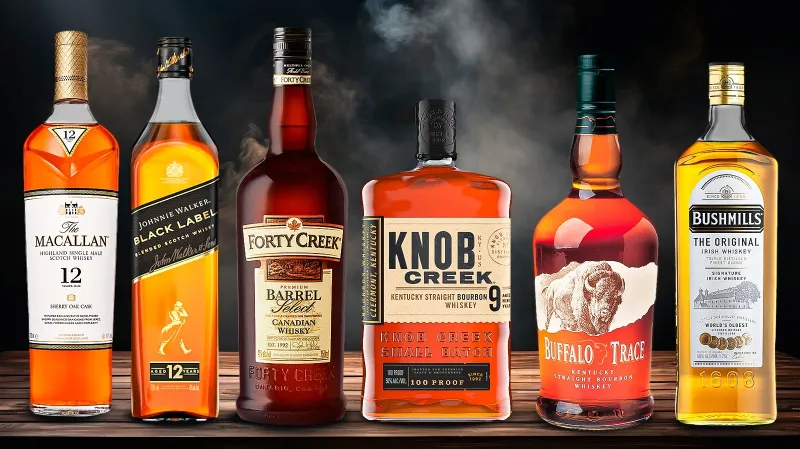
Count the categories. A shelf with only bourbon isn't a whiskey program — it's a bourbon shelf. A bar that's actually invested will have some Scotch, maybe Irish whiskey, rye, and possibly Japanese or Canadian options. Variety signals intentionality.
Look for regional and independent bottlers. If you spot a craft distillery from your state or a few independent bottlings tucked in alongside the big brands, someone curated that shelf. Those bottles don't show up by accident.
Notice what's dusty. A bottle with a thick layer of dust isn't necessarily a bad sign — it might be allocated stuff they're holding for the right customer. But if half the shelf looks untouched, those bottles aren't moving, which means nobody's ordering them, which means the selection might be aspirational rather than practical.
Ask the bartender. This is the real test. Ask what they're excited about right now. A bartender who lights up and reaches for something unexpected is worth trusting. One who shrugs and points at the most expensive bottle is just doing a job.
Why You Should Actually Care
This isn't just whiskey nerd stuff. Knowing how to read a bar's selection helps you drink better, spend smarter, and find the places worth returning to.
The bar that put real thought into its shelf is the same bar that probably trained its staff properly, keeps its glassware clean, and doesn't water down the pours when it gets busy. These things travel together. Attention to the whiskey program is usually a signal of attention to everything else.
Your neighborhood spot might not look like much. But if the shelf behind the bar tells a real story — one that wasn't written entirely by a distributor rep — then you've found something worth holding onto.
That's the bar worth showing up to on a Tuesday night. And those are the pours worth savoring.