The Price of Belonging: What Being a Regular Actually Costs You (And Why You'd Pay It Twice)
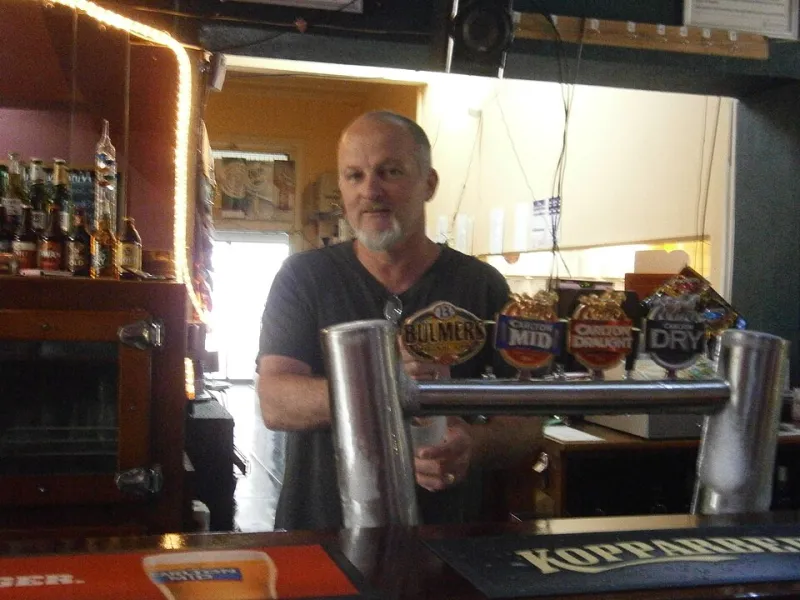
Photo: Llynne Neil, CC BY-SA 3.0, via Wikimedia Commons
Somewhere between your third visit and your thirtieth, something shifts. The bartender stops asking what you want. Your usual appears before you finish hanging up your jacket. You know where the good barstools are, which nights to avoid, and whose tab to never offer to split. You're a regular now. Congratulations.
Also: you're spending more money than you realize.
That's not a criticism. It's just arithmetic. And once you understand exactly where those extra dollars go, you might find yourself nodding along instead of wincing — because what regulars spend more on is rarely wasted. Most of it buys something real.
How the Tab Creeps Without You Noticing
Let's start with the obvious stuff. When you're a stranger at a bar, you're transactional. You order, you pay, you leave. There's no social inertia pulling you toward another round. But regulars operate differently. You're in conversation. You're comfortable. The night has a rhythm, and that rhythm tends to run long.
Studies on consumer behavior in hospitality settings have shown that familiarity with a venue is one of the strongest predictors of extended dwell time. More time at the bar equals more rounds, more snacks, and more of those "one more, since I'm here" decisions that feel harmless in the moment.
Add to that the subtle mechanics of tab management. Regulars almost always run a tab rather than paying drink by drink. That's convenient, sure, but it also creates psychological distance between each purchase and the actual spend. You're not handing over $14 every time. You're just drinking. The bill at the end is always a little more than the mental math suggested.
Tip Creep Is Real, and It's a Feature
Here's the one nobody talks about honestly: regulars tip more. Not because they're being ripped off — because they want to. You tip your bartender the way you tip a good hairdresser or the mechanic who stayed late to get your truck done. It's relationship maintenance, and both parties understand that.
A bartender who's been pouring for regulars for years put it plainly: "My regulars tip better than anyone, and they should. Not because I'm holding their drinks hostage, but because we've built something. They know I'm going to take care of them. The tip is how they say they know."
That's not manipulation. That's just how human reciprocity works. But it does mean your effective per-drink cost is higher at your regular spot than it would be at some random bar where nobody knows your name and you're just another face ordering a bourbon.
The math is real. If you're tipping 25% at a place you love versus 18% somewhere you're indifferent to, that gap compounds fast over a year of Friday nights.
The Round Psychology Problem
Then there's the social pressure of rounds. At a bar where you know people — staff and other regulars alike — the round economy kicks in. Someone buys a round. You buy a round. Maybe a third person jumps in. The night ends with everyone having spent more than they planned because the social contract of rounds doesn't track individual drink counts with any precision.
Bar-hopping strangers don't have this problem. They're islands. They buy their own drinks and answer to nobody. It's cheaper, definitely. It's also a little lonely, which is kind of the point.
So What Are You Actually Getting?
Here's where the math stops being depressing and starts being interesting.
Regulars don't just pay more. They receive more. Not in a formal, transactional sense — nobody's keeping score — but in the accumulated value of being known and trusted in a place.
Bartenders talk about their regulars differently than they talk about other customers. Not with resentment, but with something closer to professional affection. "My regulars make my shift," said one bartender at a Nashville dive bar who's been behind the stick for eleven years. "They set the tone for the room. When a regular walks in on a slow Tuesday, the whole place loosens up. I'm going to make sure they're taken care of because they make my job better."
What does "taken care of" look like in practice? It varies. Sometimes it's a pour that's a little more generous than the menu suggests. Sometimes it's a heads-up that the kitchen is about to close and you should probably order now. Sometimes it's just the bartender remembering that you had a rough week last time and asking how things turned out. These aren't formal perks. They're the texture of being part of a place.
There's also the question of access. Regulars get the table on a busy night when walk-ins are waiting. They get the honest recommendation instead of the upsell. They get the real answer when they ask what's good tonight versus what the bar needs to move. These things have value that doesn't show up in any loyalty program.
The Bar-Hopping Alternative Isn't Free Either
It's tempting to run the comparison as "regular versus explorer" and assume the explorer wins on cost. But that calculation skips a few line items.
Bar-hopping has its own overhead. You're spending time and sometimes money on transportation between spots. You're paying full price everywhere because nobody's cutting you any slack. You're navigating unfamiliar menus without guidance, which often means defaulting to safe, uninspired orders. And you're starting from zero at every bar, which is exhausting in a way that's hard to quantify but very real.
The explorer gets variety. The regular gets efficiency. Both are legitimate choices, but they're not as financially different as the raw tab numbers suggest.
The Actual Verdict
Being a regular costs more. That's just true. But it costs more the way a good gym membership costs more than doing push-ups in your living room — the premium buys environment, community, and accountability. You show up more. You get more out of it. You become part of something that has its own value separate from whatever's in your glass.
The tavern loyalty tax is real. It shows up in your tips, your tabs, your rounds, and your tendency to stay longer than you planned. But what it purchases — a seat that feels like yours, a bartender who knows your order, a room where you're not a stranger — that's not nothing.
Most regulars, if you ask them honestly, will tell you they're aware of the math. They just don't care. And that's probably the most honest endorsement a bar can get.